A Vision of Forever

Last week, I traveled back East to go to a retirement party. It wasn’t just any retirement party; it was for someone I have worked with and worked for, for a long, long time. There was a ballroom full of people. I saw people there whom I’ve known most of my working life, colleagues who became old and dear friends. It was a grand goodbye, not just to my friend who was retiring, but also to the organization that had been my home and my family for the last forty-five years. For his retirement marked my own. I worked for him and him alone, and when he was finished his work, so was I.

When I was young, I didn’t know that when I watched the sun set and the sun rise, when I saw the summer end, and watched as autumn redid the colors of the forest, that I was witnessing the eternal cycle that encompassed all of life. I didn’t know yet about death and life, and life and death. I didn’t know about the cycle of letting in and letting go.

Just before my trip, I learned of the death of an old friend and a colleague. This week, I learned of the death of the nephew of a friend of mine. This morning, I spoke to a woman whose son’s best friend is dying. This afternoon I went to a memorial service for the husband of a woman I have come to know here in Sedona, and spoke to another there whose partner died two months ago. There are times when it seems as if death is everywhere. And it is. I’ve seen it come to people I know and to people I love. It is how I came to write my book; it is why I write this blog. It was death that brought me here, but it was witnessing the cycle of letting in and letting go that taught me the little I know.

And today, here I am, of a certain age, knowing that death is not followed only by the space life used to occupy. I am able to see life all around me, sure that it doesn’t go anywhere. The sun sets and the leaves fall, and life continues. It changes form, but it doesn’t go anywhere. A tree will fall and leave its seed in the ground to grow again.

But even when we know what death is—the shedding of the physical body for an ethereal body, a spirit body, a non-suffering body, the loss of that beloved physical presence is painful and heartbreaking. Even when we know that our loved one is safe and happy, it is a long while before we can feel anything but grief. But grief, too, is part of the cycle. It, like the snow and ice of winter, is followed by unforeseen and unimaginable gifts, whether we want them or not.

In the past couple of days, I’ve seen a movie or two, heard a song here and there, and read a poem, all of which had pretty much the same theme—letting in and letting go. L’Histoire de la Vie. The Circle of Life. The 1946 movie and great novel, The Yearling.  They all came to me within a few days of each other. When this happens, especially in the midst of a grand goodbye, several deaths and a memorial service, I stop and listen. Apparently, the Universe is trying to tell me something, or remind me of something.

I think It is saying, Look. Look again. See how this works. It is happening all the time and everywhere. Some of it will break your heart. But all of it is followed by something you’ve never had before—the wonder of life without end, the gift of love, and a vision of forever.

***

Read The Messenger: The Improbable Story of a Grieving Mother and a Spirit Guide by Helen Delaney. Find it at www.amazon.com  For a signed copy, go to www.themessenger.space

book-cover-image

Go back

Your message has been sent

Warning
Warning
Warning
Warning

Warning.


Traveling

Dear Friends:

I am traveling today.  See you next Sunday.

Go back

Your message has been sent

Warning
Warning
Warning
Warning

Warning.


How To Receive (Continued)

If you didn’t read my last post before Christmas, you might want to take a look at it now. This is the continuing story of my visit to a Hopi Reservation.

***

When I last left you, the Tewa elders had chosen from the gifts brought to them by the people of Sedona. It was their responsibility, not ours, to distribute the food, blankets, and clothing to the families who needed them the most. I marveled at their grace, dignity, and sense of humor – just the opposite of what I had expected. I expected the Tewa to be like me – resentful and shamed.  After all, here we were – dispensing charity to people for whom it should never have been necessary. What I saw was a people who knew how to receive without rancor or judgement. I also came to see the generosity of the white people of Sedona who had given so much and worked so hard to put this all together. The word that came to my mind was reconciliation. There was also the feeling of family. In that room, I saw my grandfather and father in those elder Tewa faces. And when all was done, I was looking forward to being a guest in a Native American home. Every person who came was hosted by a Tewa elder. It was their turn to give and ours to receive. In this way was created a beautiful balance.

On the road to Ginger’s house for lunch (Ginger was our Tewa hostess), two men waved at us to stop. My friend slowed the car and one of them approached with a little hand-made doll in his hand.  He was miserable-looking, as if he had been on a long, slow drunk. He was staggering a bit, and his eyes were bloodshot.

In spite of our warm reception and the smiles of the elders, let me not give the impression that poverty, despair, and alcoholism do not exist on that Hopi reservation and undoubtedly on every other one in this country. It was in this man’s eyes that I saw the long history of hopelessness among our Native American people. Behind him were the sad, poor houses in which the sad poor were living.  My friend gently told him that he could sell his doll back at the community center where others were displaying hand-crafted objects. We were on our way to Ginger’s, she said, and could not be late. He accepted our decision not to stop, and said no more. This man was heartbreak in person. So there is that, let us not forget.

Ginger’s house was a modest, pleasant bungalow.  Inside, three elder women were waiting to greet us. The warmth and the smells seemed to say, “Come in. You are welcome here.” The aroma of hand-grown tea brewing on the stove mingled with that of two large pots of soup, one pork and one mutton. Added to the broth was hominy from corn grown “up high on the mesa,” corn grown with seeds gathered and saved each year from a pure strain that had not been adulterated with hormones or genetically modified, corn ground by hand. Bread that had been baked in ovens outside was on the tables they had prepared for the six of us who had been assigned to Ginger.

At my table was Evangeline, an elder, her husband, Leon Nuvayestewa, and their great-granddaughter, a girl of about ten. Nuvayes-tewa, Leon told us, was his father’s name. Hopis have but one name, he explained, and Nuvayes meant falling snow, the kind with big flakes, he said with a big smile. Leon talked to us throughout lunch, studiously avoiding the football game he had been watching on the big screen TV.

The baby spinach was grown by Evangeline, picked in the spring, and dried on a big wagon wheel to be eaten in the winter. I saw blue cornbread for the first time. It was flaky and paper-thin, like a strudel pastry without the filling. And it was truly blue. The soup was comforting, and the tea was strong and hearty. We were warm, and fed, and told stories of what life was like on the mesa in Evangeline and Leon’s youth. It was not easy, they assured us. The women would haul water from a spring below to the top of the mesa. They laughed telling us about the slow trickle from the spring and how long it would take to fill a bucket. After the precious water was used for cooking and drinking, they said, there was not a lot left over for showers. And they laughed again.

On the walls were photographs of the younger generation – handsome, beautiful children in native dress who were…somewhere else. They had gone on to places off the reservation, to school, to jobs. But Tewa children on the reservation were learning their language, they told us, in classes devoted to preserving the Tewa culture.

Before we left, I promised to send Leon a copy of my book. My friend told him about my Cherokee grandfather and about The Messenger and he was very interested. While I am always cautious when explaining my book to non-Natives, I felt very comfortable telling Leon about my spirit guide, Lukhamen. Stories about spirit guides are not unusual among Native peoples, and he asked me if I would send him a copy. In return, he promised to send me a Hopi cookbook, something the elders had put together. All I could think of was a line from the movie, Dances With Wolves – “Good trade. Good trade.”

As we made our way home, the sun was beginning to set. The road stretched to the horizon and the endless sky of Arizona was a panorama of pink and lavender clouds. A sparkling star peeked through, here and there. We didn’t speak much on the trip back. I think we didn’t want to lose the feeling of harmony we had felt in that home, among people who treated us as friends, as relations. Sitting there among them, it felt as if time had folded back on itself and that it was the time when they lived on the land in their tepees, when there was buffalo, when family, food, stories, and laughter were the bonds of family, of life. For that moment, we were given a glimpse of a time that was and is no more.

***

Read more about a time that was and is no more in The Messenger: The Improbable Story of a Grieving Mother and a Spirit Guide by Helen Delaney. Find it on www.amazon.com. For a signed copy, order it at www.themessenger.space

The Messenger IMG_0416

Go back

Your message has been sent

Warning
Warning
Warning
Warning

Warning.


How To Receive

I’ve lived on the East Coast most of my life, but five months ago, I moved to Sedona, Arizona. I felt called here after the death of my husband. Others migrants have told me they felt called too, and none that I’ve met can say why, exactly.  It probably doesn’t matter. What matters is that we heard the call and we came. We think we are here for a reason. Whatever that reason may be, one thing is sure: I’ve landed in a great classroom.

Last week, I went with one of my new friends to visit a Hopi reservation. “It’s about a two hour drive from Sedona,” she said. “Plan to spend the day.” A group of people from Sedona have, for the past eleven years, brought clothes and food at Christmastime to the Tewa people who live on the reservation.  I said yes. And then, I wished I’d said no.

Native American blood runs through my veins, thanks to my grandfather who was either full-blooded or part Cherokee. This connection to native peoples has always called out to me – like Sedona – but I have had no contact with my grandfather’s people, and no meaningful contact with any Native Americans. My grandfather died when I was young, but I remember him. I have a photograph of him on my piano. He is seated, handsome and straight, with his six children in front (the oldest died), the baby, my Uncle Robert, on his knee, my father, the oldest boy, standing tall and solemn to his left. Standing behind the children and next to him is my grandmother, a white woman, who, I believe, was from an Irish indentured family, and for whom I am named. Not many records were kept of people like these, and my family has no documentation of their births, their marriage (which was illegal in the South) or their deaths.

I can just imagine what their lives must have been like, living in South Carolina in the late eighteen hundreds, a white woman and a man of color. No, I guess I can’t. I can only imagine one true thing about them, and that is that it must have taken a great deal of love to keep them together. And alive.

My new friend said that the visit to the reservation would be a “connection” for me. In the days before we were to go, and while helping to pack boxes of canned goods, pasta, coffee, hand lotions, and other basics, I began to feel…a growing resentment. “If we hadn’t taken everything from them,” my mind said, “we wouldn’t have to be doing this at all.” I recalled photographs of white hunters, posing proudly for the camera before mountains of buffalo hides, careless mercenaries who left carcasses to rot on the plains while they sold hides for profit and robbed an entire people of their source of food. I went through every wrong, every bit of treachery, every broken promise made to a people whose lands, customs, languages, and freedom were taken from them. I was not in a good frame of mind when we left. I pictured the people we were going to see – humiliated and angry, horribly poor, unwilling recipients of charity who would tolerate our presence and our presents because of their great need.  I became more apprehensive as we drove through a vast plain, on a road that stretched to the horizon, where long, long ago, the buffalo were indeed plentiful, and where now there was nothing except the magnificence of mesa land.

As the cars were unloaded at the community center in a place called Polacca, my friend said, “Come with me and meet the elders.” Seated along a long hallway were beautifully dressed white-haired men and women who had come to represent the Tewa people. As I went along the line to greet them, each of them smiled, took my hand in theirs, and welcomed me as if I were their daughter. I found it hard to hold back the tears as I went along, for what I saw was not what I had expected. There was a great…clarity…about these old people, a gentleness, a serenity. It was as if they were saying to me, “It’s all right. We know who we are.” Some of them were in wheelchairs. Others held canes, still others looked robust and fit, but in each lined face what I saw was my grandfather.

I learned that we were not to distribute what we had brought to Tewa families. The elders would receive the gifts and they would distribute to the families most in need. And I learned something else. When I saw the great room of the community center with tables around the wall, I realized that the boxes that I’d help put together were just the tip of the iceberg. There were tables laden with hand-knitted caps, blankets, frozen turkeys, sacks of potatoes, and all manner of vegetables and commodities. The businesses of Sedona, the stores, and ordinary citizens had sent mountains of gifts. One word came to my mind: reconciliation.

One elder after another stepped to the microphone to address the group. Some spoke in their native language with an interpreter. They were gracious, appreciative, warm, funny, and above all, welcoming.  We were, after all, visitors. This was their home, their land, and they opened their hearts to us. Afterwards, I learned, we were to be hosted by a Hopi family and given lunch. There was a big Christmas tree in the room, with hand-made decorations, and they invited each one of us to come and take one. Mine was a painted baby’s rattle. There were mounds of homemade donuts for us (which were incredibly delicious) and large urns of coffee.

As the elders walked by each table and chose the gifts they were to distribute, they stopped to chat. I stood at the table with the knitted caps. They took their time in choosing. There is something about people who live close to the land that gives them a certain…surety.  Like my grandfather, who was a farmer, their movements were unhurried. Their gaze was steady, and age gave them an aura of wisdom and dignity. What struck me was that they were familiar. They were like family, like the family I visited in South Carolina when I was a little girl. They brought back my loved ones who have been gone for a long time. They were my grandfather, my father, my aunts and uncles who live now in a photograph on my piano and to whom I speak each night before I go to sleep. They were people who knew how to give, but more importantly, they were people who knew how to receive.

To Be Continued

***

Read The Messenger: The Improbable Story of a Grieving Mother and a Spirit Guide by Helen Delaney. Find it at www.amazon.com or for a signed copy, visit www.themessenger.space.

The Messenger IMG_0416

Go back

Your message has been sent

Warning
Warning
Warning
Warning

Warning.

Eddie’s Christmas Message

candle

The holidays can be an awful time of year for parents who have lost a child, or sons or daughters who have lost a parent. Whether you celebrated Christmas, Hanukkah, Kwanzaa, or just a vacation with the person who is now in Spirit, the music, the decorations, the planned family gatherings, all make the separation sharper and the loneliness deeper.

The first Christmas without my son Eddie, and the first Christmas without my husband Bill, were like that for me. Eddie died in late September. By Christmastime, my heart was ripped apart. There would be no gifts for Eddie,  no seat for him at the table. When my ex-husband suggested we make a dinner for my three daughters and have a tree with decorations, I was overcome with anger. As I was giving vent over the telephone to my rage about decorating, wondering how he could think about decorations with Eddie gone and cursing Christmas forever, I heard a noise in my hallway. While my ex stayed on the line, I went to investigate. Seeing nothing, I opened the closet door and there, on the floor, were all of my Christmas decorations. Nothing else had fallen. Nothing was broken. Shaking like a leaf, I whispered, “I hear you Eddie, I hear you.” Although our Christmas dinner was sad beyond belief, there was a tree and a dinner, and I have decorated for my daughters ever since.

My first Christmas without Bill was also a time of deep loneliness. Nothing – nobody – takes the place of that one person who used to make the holiday and everything around it better for you. Christmas was Bill’s thing. He loved it like nobody else I know, and I would be lying if I didn’t say that I miss his joy around this time of the year, and I probably always will.

But I write this blog hoping that, if you are in grief or loneliness, you might see yourself in me and know that you are not alone and that all is not lost. At first, I was so blinded by grief that all else was hidden from me. There is a time for grief, there is even a time for blindness, but what I have evidence of, what I talk about, and what I have written about in my book, is the nearness of the ones we love, those dear to our hearts who seem to be gone. But Nobody’s Gone for Good.

For some, that knowledge is not enough, for although there is evidence of their nearness, the heartbreak of being in one dimension while your loved one is in another is all too real. It is too with you.

Eddie passed into spirit thirty-seven years ago, and Bill seven years ago.  The promise of “Blessed are they who mourn, for they shall be comforted,” did not come true for me for a long time, but the hard work of progression toward it began with With Eddie’s Christmas message. He began it for me. He helped me to open my mind; he helped me to become willing to leave behind everything I believed, everything I thought I knew, everything I had been taught about death, and about life. I read. I prayed. I spent hours in meditation. It took years, and although I didn’t know it at the time, I was emptying a mind hard-wired to believe that the only things that were real were those I could conceive, touch, or see. The most important gift of this “emptying” was what was came to fill it – the knowing that I was not separate from the Universe, not separate from Eddie, not separate from Bill, not separate from anyone, whether or not I shared a dimension with them.

This is a tall order, I know, but it is also true that with this awareness, peace and comfort have been given to me over time. These gifts have never left me; they have only become more precious with the years. The more I am willing to let go of my preconceived ideas, the more gifts I receive. Next week I will tell you the story of my visit to a Hopi reservation and the Tewa people I met there. I will tell you how they changed my mind, one of the greatest gifts one could ever hope to receive.

***

Read The Messenger: The Improbable Story of a Grieving Mother and a Spirit Guide by Helen Delaney. Find it at www.Amazon.com or www.themessenger.space.

The Messenger IMG_0416


Go back

Your message has been sent

Warning
Warning
Warning
Warning

Warning.

The Wisdom to Know The Difference

This is about my cat. Well, yes and no.  It’s about my cat, but like everything else in my life, what’s happening at any given time is more than it appears to be.  Especially the things that are disturbing. Those, my dear friends, are always about lessons.

Sedona is a place where lessons seem to be more, shall we say…vibrant. This place is not a pink spiritual cloud upon which one floats about in a constant state of bliss. On the contrary. This is where lessons reach the 2.0 level. It’s where things get refined.

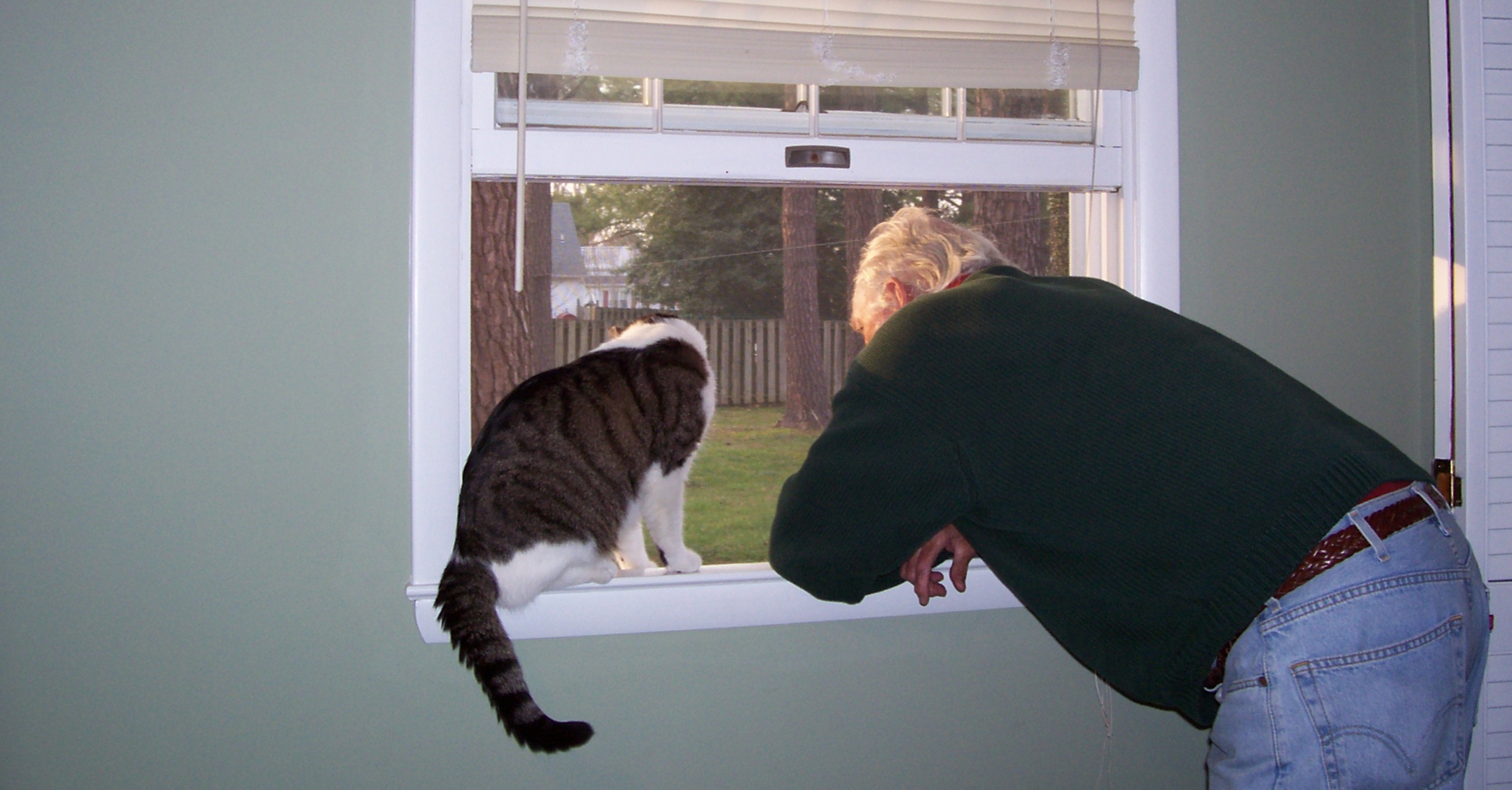
Back to my cat, Dorian Gray. Dorian and I have been in a struggle ever since we got here, four months ago. He was an outside cat back in Maryland. He was born free, ruled the neighborhood, and hunted like a country cat, which is what he was. I live in a sedate, closed complex here in Sedona, where pets are not allowed to run free. (Somebody told me it’s really about dogs.) I’ve also been warned about the coyotes, who roam and prey on cats. Successfully. Dorian doesn’t know about coyotes, and has continued to try to get out at night, his hitherto roaming time. I have kept him inside, giving rise to night howls. This other-worldly caterwauling (now I know why they call it that) took its toll on me. I became sleep deprived and irritable. It was like having a hangover. Every. Single. Day.

I tried putting a harness on Dorian to give him walks. I got him into it once. We went outside, and he was terrified because he was restrained and couldn’t protect himself like he was used to doing. I tried to take it off, and he scratched and bit me, something he has never, ever done. I had to take him to the vet so that one person could hold him and another person could remove it.

I tried the vet’s prescription for Prozac. That turned him into an animal I didn’t recognize – a lethargic little thing with all of the joie de vivre gone out of him. And it tasted like holy hell. (I tried a bit on my finger.) One time, after I administered it (it was a syrup), he foamed at the mouth. That was the end of Prozac by mouth. I tried a cream version that is put on the inner ear.  Still not good for this little animal.  I tried a natural remedy, a calming botanical, which made him happier. And it had no side effects. We spent a few quiet nights when I actually got some sleep, and then, it happened. Dorian escaped. Now there is no going back.

I have a small patio. When I first arrived, I hired a handyman to cover the open fence with chicken wire. I bought more wiring and gerrymandered it all around the top and sides to prevent him from climbing over the first chicken wire. When I was finished, it looked like a crazy person did it.  No matter how it looked, at least – I thought – I could give him a place to be with fresh air and sunshine. But Dorian saw it as a cage without a roof. He kept looking for the loophole in my engineering, and finally, after studying it for four months, he found it. When I went out to check on him, he was gone. In a panic, I got in my car and scoured the neighborhood, looking for him. I climbed down the rocky wash in back of my house – something stupid for someone my age to do. I saw him in the wash, Dorian saw me, and he ran. Frustrated, I climbed back up, came home and cried. After a while, he was back at the patio door, crying to come in.

Now we come to the lesson. For over four months, I have been suffering with this cat. And I mean suffering, because I love him and I am afraid of losing him. Love? Suffering? They come as a pair, sorry to say.  I feel guilty because I have deprived him of the only life he has ever known, and I feel selfish, because I have kept him as my companion, whether he wanted to be or not.  I’ve brought him to a strange place and forced him to do his business in a box, which has destroyed his privacy and humiliated him. He lets me know that. To his credit, he has changed a bit. Since we’ve been here, he’s taken to lying on top of me when I watch TV in bed. He puts his little head on my chest and goes to sleep. He’s never been a cuddler, but he’s turned into one. I let him sleep in my bed now since he has no fleas and never gets dirty. He’s become more loving, more endearing, and I’ve gotten more dependent on him to be here with me. This is undoubtedly a trick of the Universe. Something to make the lesson a little more…costly.

The day after he escaped, I let him out the front door. After another night of howling, I was angry and woozy, and just wanted some relief. “If he doesn’t come home, he doesn’t come home,”  I thought, and I cried again. My neighbor rang my doorbell soon afterwards, and there he was. He had gone to the wrong door. They’re all blue and they all look alike.

There is something going on here, and I need to know what it is. That is the key to my spirituality. It’s the seeking, the finding out, the exploration of suffering. I’ve spent a great deal of my life exploring grief. God knows, I’ve had my share of it. If you’re new to this blog, you should know that my seventeen-year-old son died a long time ago, and that my husband died seven years ago. I’ve learned a few things about suffering. But grief, like any other major challenge, has its lessons and gifts. Suffering is part of life on this plane. What’s important to me is to discover how it is working for me and for my soul, which by the way, has ordered these lessons for me. Ah, but that’s for another day, another blog.

Dorian, my teacher this time, is showing me what little control I have over things, how I need to stop fighting life and the Universe to hold onto something that really doesn’t belong to me. He is showing me that he, like all creatures, is free to live and free to die in his own way, in his own time. My daily prayer is that God will grant me the serenity to accept the things I cannot change, the courage to change the things I can, and the wisdom to know the difference.  I couldn’t hold on to my son, and I couldn’t hold on to my husband, my mother, or my father. I couldn’t keep them with me forever. I couldn’t keep them “safe.” I accepted these things over time, and you would think I’d have learned this lesson by now. Apparently not.  This is, after all, the 2.0 version of lesson-learning.

I’ve thought about it, and I’ve come up with several reasons why I am trying to hold on to this cat by opposing a Force of Nature. That isn’t even sane.  I have bad memories of my first pet and how she died. I vowed that I would not let anything like that happen to Dorian. I made a promise to myself that I am not able to keep. Dorian was my husband’s cat. Am I trying to hold on to him by holding on to the little animal who was so close to him?

100_0133

To let this animal be who he is, who he insists on being, I have to risk going through grief again, something I desperately don’t want to do.  There are undoubtedly more underlying factors to understand, but as a friend said to me today, “More will be revealed.” I told her I keep looking for it, and then she said something even wiser: “Don’t look for it,” she said. “It will come to you.” Something else I had forgotten.

It is a bright, wintry day here, and I let Dorian out back again. (I still can’t bring myself to let him out at night when the coyotes roam.) He climbed to the top of the wall separating me from my neighbor (I have removed the crazy looking obstacles), held his head up to the fresh air and sniffed. The sky was bright blue and the tree in back was golden in the sun. The breeze lifted his fur, ever so slightly. I don’t think I’ve ever seen him so beautiful or so happy. And then he jumped down, and was gone.

_________________________

Epilogue.

Before I went to the movies this afternoon (my wise friend invited me to keep my mind off my suffering), I decided to look a few doors away for Dorian, and I found him. His territory is not that large, at least not yet. There he was, backing out slowly, ever so slowly, from the driveway, his fur fluffed to make him look twice his size. Evidently, he had seen something threatening. I walked slowly toward him, picked him up, and as I carried him home, I whispered into his little face. He looked up at me with gratitude and love. I put him down on the bed and went to the movies.

***
The Messenger IMG_0416

Read The Messenger: The Improbably Story of a Grieving Mother and a Spirit Guide by Helen Delaney. Find it at www.amazon.com or www.themessenger.space.

***

Go back

Your message has been sent

Warning
Warning
Warning
Warning

Warning.

The Messenger Groups

After the loss of a loved one, after the funerals, services, and memorials, after family and friends have gone home, the one suffering the most – the wife, the husband, the mother, the father – is alone in a world that has turned upside down. The death of a loved one is disorienting. It leaves you in a space no one else occupies. It is new, frightening territory, and above all, it is desolate. No one is there but you.

That is why I have decided to form something called The Messenger Groups. The Messenger is the title of my book, in which I have told the story of my grief and how I was led onto a path of hope. It is how I discovered a reason to live, and live a life that is full, and most importantly…normal. My son died thirty-five years ago. My husband died six years ago. I am well acquainted with the particular kind of isolation grief brings with it.

I remember riding the metro in Washington, D.C., shortly after my son died. I watched people reading their newspapers, or chatting about nothing in particular, people daydreaming, people just going to work. As if my son hadn’t died.

They don’t know Eddie died, I thought to myself. They don’t know about that hole in the ground. I lived alone with that one devastating fact, that one circumstance that separated me from them, that separated me from everybody. I was different. I was alone. I was separate. There was nobody who understood what had happened to me, what happened to my son. There was nobody with whom I could talk, and there were no words that could make anybody understand what it was like to lose a child. Later, I would see old couples holding hands, couples who had lived a long lifetime together, couples helping each other cross a street, couples who were obviously still in love after many decades, and I knew that I would never have that with my husband.

I understand that pain, and it has come to me that, as my book has helped more than one person to see death and grief differently, there is something more that is calling out to me, and that something is The Messenger Groups.

I am proposing to form small groups of grieving mothers, fathers, daughters, sons, wives, husbands – anybody in grief –  in which they and I will talk to each other, keep each other company in the awful days after the loss, whether those days are near in time or farther away in time. Grief takes its own time, after all. I envision us sharing what only we can share. Together.

I see us, regardless of geography or time – for I know people in several countries that have experienced these losses – talking to each other via Skype, perhaps once a week, perhaps once a month. We will have no agenda, no purpose other than that of being together, keeping each other company, giving each other hope, one hour at a time. I see us in small groups, perhaps of four or five, so that we might all have time to talk.

And now, I am asking for your help. If you, or if you know of someone who would be interested in joining me and others like me, please share this blog with them, tell them about my book if you have read it, or invite them to visit my website if they’d like to know more about me at www.themessenger.space.

Please write me or ask your friend to write me in the contact form below with their email address and I will get in touch with them.

Thank you, dear friends. Help me to find those that are alone in their sorrow, and tell them that they are not alone.

***

Read The Messenger: The Improbable Story of a Grieving Mother and a Spirit Guide by Helen Delaney. Find it at www.amazon.com or www.themessenger.space

The Messenger IMG_0416

Go back

Your message has been sent

Warning
Warning
Warning
Warning

Warning.


The End and The Beginning

Everything ends. Some endings are welcome, and some break your heart. When this happens, time stands still. Nothing exists beyond the travesty, the tragedy. You’re stuck in the awful present of it. The ending is all there is.

I was in Pennsylvania and New York last week. In beautiful Valley Forge, I attended a funeral. And in New York, where I visited my daughter, I was surrounded by people in another kind of grief. You all know what I’m talking about. And I was in the immediacy of all of it. We were all in the shocking, stunning aftermaths of endings, temporarily hidden from the future by the curtain of…finality.

And still. One could not entirely ignore the beauty of autumn, because it was everywhere. Color was still in the trees, the leaves rustled underfoot, and the sky…oh, the sky…was so very, very blue. I’ve always hated November. For me, it has always signaled the end of warmth and sunlight. I do not thrive in winter, or in dark days. But those days in Valley Forge and New York were summer-like, warm and sunshiny, as if Nature was intent on defying the inevitable. It was the end of autumn, but oh, so beautiful–like the life of the dear soul who passed away, like the era of dignity, hope, and promise that will soon be but a memory in our country. We grieved in the face of beauty. We could not ignore one and we could not ignore the other, because unarguably, they were both present.  I believe that in this duality is the love of a Benevolent Force that would not leave us in an end without a trace of beauty, and without a beginning.

What I have observed in my relatively long life is that an end that breaks our hearts or takes everything from us, is the one thing that, above all others, has the power to awaken us to a new, heightened sense of the goodness of life, to a sunlight of the spirit. To a recognition of Spirit within us and around us. I have seen it happen many, many times. It has happened to me, more than once. The death of my son was the beginning of my spiritual life. As it was his. The death of my husband deepened that spiritual life, as did the deaths of my parents. The nearness of my own death gave me the health of body and spirit I have in such abundance today. These were my endings and my beginnings. Never was there one without the other.

I went to a funeral. But what I saw there was love. My friend, as I did seven years ago, honored and celebrated with family and friends the beautiful life of the husband who loved her. I hugged and was hugged by dear friends I had not seen for a long time. I heard music of incomparable beauty, sung in Japanese. And outside was the golden autumn.  In the next days, I spent hours talking to my daughter as we tried to come to grips with what was ending in our country. Every friend of hers we met on the street stopped for an embrace. We sat in a sunlit café and talked with more friends, all of us processing our grief, our end. Outside was the golden autumn. And inside our hearts and minds, a space began to grow, making room for another beginning.

***

Read The Messenger: The Improbable Story of a Grieving Mother and a Spirit Guide by Helen Delaney. Find it at www.amazon.com or www.themessenger.space.

The Messenger IMG_0416

Go back

Your message has been sent

Warning
Warning
Warning
Warning

Warning.